고정 헤더 영역
상세 컨텐츠
본문
Introduction
The landscape of Software as a Service (SaaS) is rapidly evolving, compelling developers to continuously seek out the best tools and technologies. SaaS, known for delivering applications over the internet, eliminates the need for traditional installation methods. This cloud-based model requires a unique set of tools and technologies for development, deployment, and scaling. Understanding the right tools is crucial for crafting robust SaaS solutions, ensuring efficiency, security, and a seamless user experience. In this blog, we'll dive into the top 10 essential tools and technologies that every SaaS software developer should have in their arsenal. Also Read SaaS vs PaaS vs IaaS.
Importance of Tools and Technologies in SaaS Software Development
Overview of SaaS Software Development
Software as a Service (SaaS) has revolutionized the way businesses use software. Unlike traditional software that is bought and installed on individual machines, SaaS is accessed online and operates on a subscription basis. This model offers several advantages, including scalability, accessibility, and cost-efficiency. However, developing SaaS applications, especially through custom software development, involves unique challenges such as multi-tenancy, security, and continuous integration and deployment, making the choice of development tools and technologies critical.
Role of Tools and Technologies in Enhancing SaaS Development Process
The right set of tools and technologies can significantly enhance the SaaS development process. They can automate repetitive tasks, improve code quality, ensure security, and foster collaboration among development teams. Moreover, with the rapid pace of technological advancement, staying updated with the latest tools is essential for developing competitive and innovative SaaS solutions. In essence, leveraging cutting-edge tools and technologies is key to achieving efficiency, scalability, and robustness in SaaS software development.
Top 10 Must-Have Tools and Technologies for SaaS Software Development
Cloud Platforms
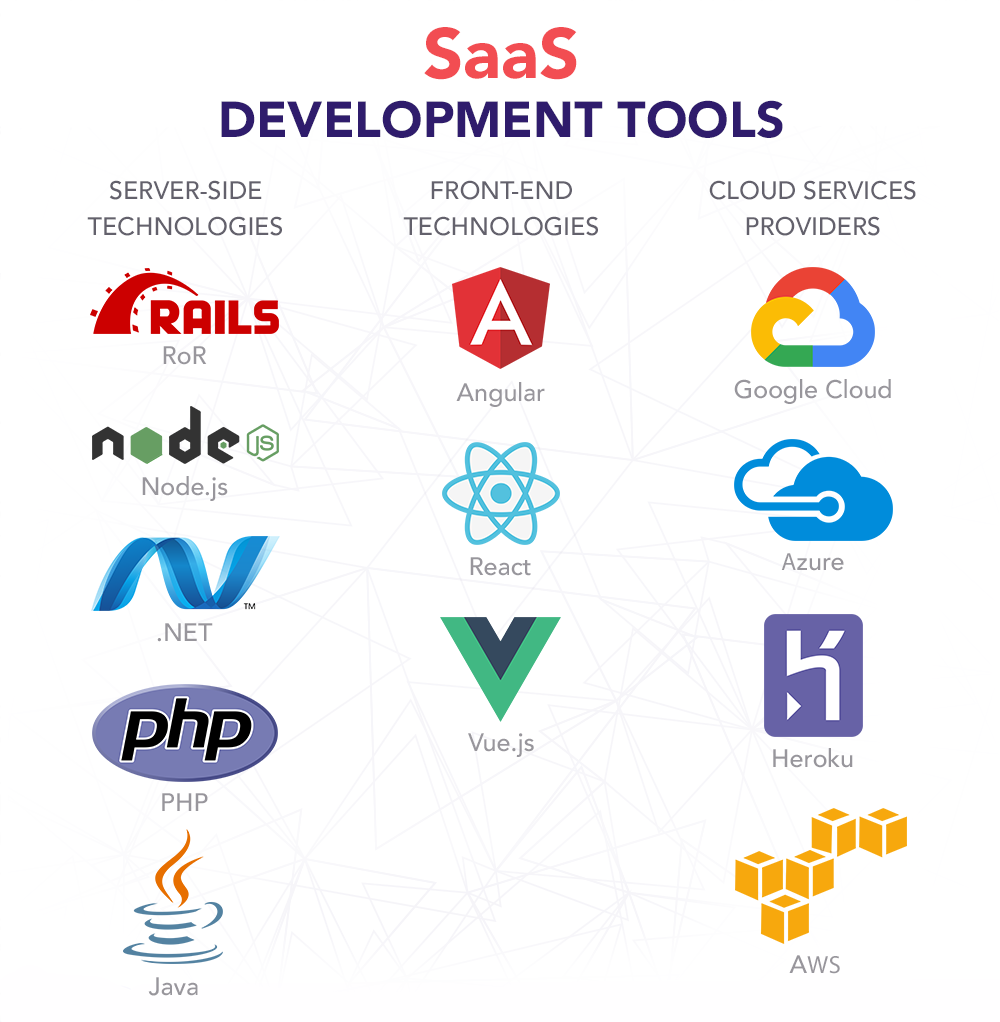
Cloud platforms like Amazon Web Services (AWS), Microsoft Azure, and Google Cloud Platform (GCP) are foundational to SaaS development. They provide the infrastructure, platform, and various services necessary for building, deploying, and managing applications in the cloud. These platforms offer elasticity and scalability, enabling SaaS applications to accommodate varying workloads effortlessly.
APIs and Integrations
APIs (Application Programming Interfaces) play a crucial role in enabling software applications to communicate with each other. For SaaS applications, APIs facilitate integration with third-party services and platforms, enhancing the application's functionality and user experience. Tools such as Postman and Swagger are widely used for API development and testing.
DevOps Tools
DevOps tools such as Jenkins, Docker, and Kubernetes streamline the development process by improving collaboration between development and operations teams. They help in automating the software delivery process, from code development, testing, to deployment, thereby accelerating release cycles and enhancing product quality.
Data Analytics Tools
Data analytics tools like Google Analytics, Mixpanel, and Tableau are essential for understanding user behavior and optimizing the SaaS product accordingly. These tools provide actionable insights into user engagement, feature usage, and retention, driving data-informed decision-making.
Security Practices and Tools
Security is paramount in SaaS applications to protect sensitive data and ensure regulatory compliance. Implementing robust security practices and tools such as SSL/TLS for data encryption, OAuth for authentication, and tools like Qualys for vulnerability scanning is essential to safeguarding the application against threats.
Containerization Technologies
Containerization technologies like Docker and Kubernetes encourage consistent development environments and streamline application deployment. They package applications and their dependencies into containers, ensuring that the application runs reliably in different computing environments.
Continuous Integration/Continuous Deployment (CI/CD) Tools
CI/CD tools such as Jenkins, GitLab CI, and CircleCI automate the process of integrating code changes into a repository and deploying them to production. This enables frequent and reliable releases, reducing time-to-market and fostering continuous improvement.
Microservices Architecture
Adopting a microservices architecture enables SaaS applications to be developed as a collection of loosely coupled services, improving modularity, scalability, and maintainability. Technologies like Docker and Kubernetes support this architectural style by facilitating service deployment and management.
Programming Languages and Frameworks
The choice of programming languages and frameworks significantly impacts the development process and outcome. Popular choices for SaaS development include JavaScript with frameworks like React and Angular for frontend development, and Python, Ruby, and Node.js for backend development.
Monitoring and Logging Tools
Effective monitoring and logging tools such as Prometheus, Grafana, and ELK Stack (Elasticsearch, Logstash, Kibana) are crucial for maintaining the performance and reliability of SaaS applications. They enable real-time tracking of application health, performance bottlenecks, and user activities, facilitating quick resolution of issues.
How to Choose the Right Tools and Technologies for SaaS Development
Choosing the most suitable tools and technologies for SaaS development is more than just about personal preferences. It's a strategic decision that can significantly impact the success and scalability of your software. To streamline the selection process and ensure you're making informed decisions, it's crucial to focus on a few key considerations.
Considerations When Selecting Tools
When selecting tools and technologies for SaaS development, there are several factors to consider. They include:
- Compatibility and Integration: Ensure that the tools you select can seamlessly integrate with one another and are compatible with your current ecosystem. This prevents future integration headaches and promotes efficient workflows.
- Scalability: As your customer base grows, your software will need to handle increased loads. Choose technologies that can scale smoothly without requiring a complete overhaul.
- Security: With cyber threats on the rise, the security features of the tools and technologies you choose are paramount. Look for solutions that offer robust security measures to protect your data and that of your customers.
- Cost: While high-quality tools often come at a price, there are many cost-effective options available. Consider both upfront and long-term costs in your decision-making process.
- Community and Support: Tools with a large user community and excellent support services can significantly reduce learning curves and provide vital resources when troubleshooting.
- Future-proofing: Opt for technologies that are being actively developed and updated. This ensures that your SaaS product remains compatible with the latest industry standards.
Advantages of Using the Right Tools
Investing time and resources into selecting the right tools and technologies for SaaS development comes with a myriad of benefits:
- Increased Efficiency: The right tools can automate repetitive tasks, streamline development processes, and reduce the time to market for your software.
- Improved Scalability and Reliability: Tools designed with scalability in mind can help you manage growing user demands, while ensuring high reliability and uptime.
- Enhanced Security: High-quality tools often come with advanced security features, helping protect your application from vulnerabilities and cyber threats.
- Better Customer Experience: Using the right technologies can lead to a more responsive, intuitive, and feature-rich application, thereby improving the overall user experience.
Risks of Not Using the Appropriate Tools
Failing to choose the appropriate tools and technologies for SaaS development can have significant negative implications, such as:
- Technical Debt: Using outdated or incompatible tools can lead to technical debt, where temporary solutions become permanent problems, slowing down development and increasing costs in the long run.
- Security Vulnerabilities: Inappropriate tools may lack essential security features, leaving your application vulnerable to attacks and data breaches.
- Scalability Issues: Tools not designed for scalability can hinder your ability to grow your user base, leading to performance issues and unsatisfied customers
- Increased Costs: Ultimately, the wrong tools can lead to increased operational costs, from extended development times to additional expenses for replacing or upgrading inadequate technologies.
Conclusion
Choosing the right tools and technologies is a critical step in SaaS software development that should not be overlooked. It requires a thoughtful approach, considering factors like scalability, security, cost, and future-proofing. The benefits of making the right choice include increased efficiency, improved scalability and reliability, enhanced security, and a superior customer experience. Conversely, the risks of not selecting appropriate tools can lead to technical debt, security vulnerabilities, scalability issues, and ultimately, increased costs.
In the evolving landscape of SaaS software development, staying abreast of the essential tools and technologies is paramount. From cloud platforms that offer unparalleled scalability to APIs that ensure seamless integration, the right tools can significantly bolster the efficiency and effectiveness of your SaaS solutions. Whether you're looking to hire SaaS developers or engage a custom software development company, understanding the core distinctions between SaaS, PaaS, and IaaS is crucial. Remember, the success of your SaaS project hinges not just on the technology you choose but also on how you leverage these tools to meet your development goals.


